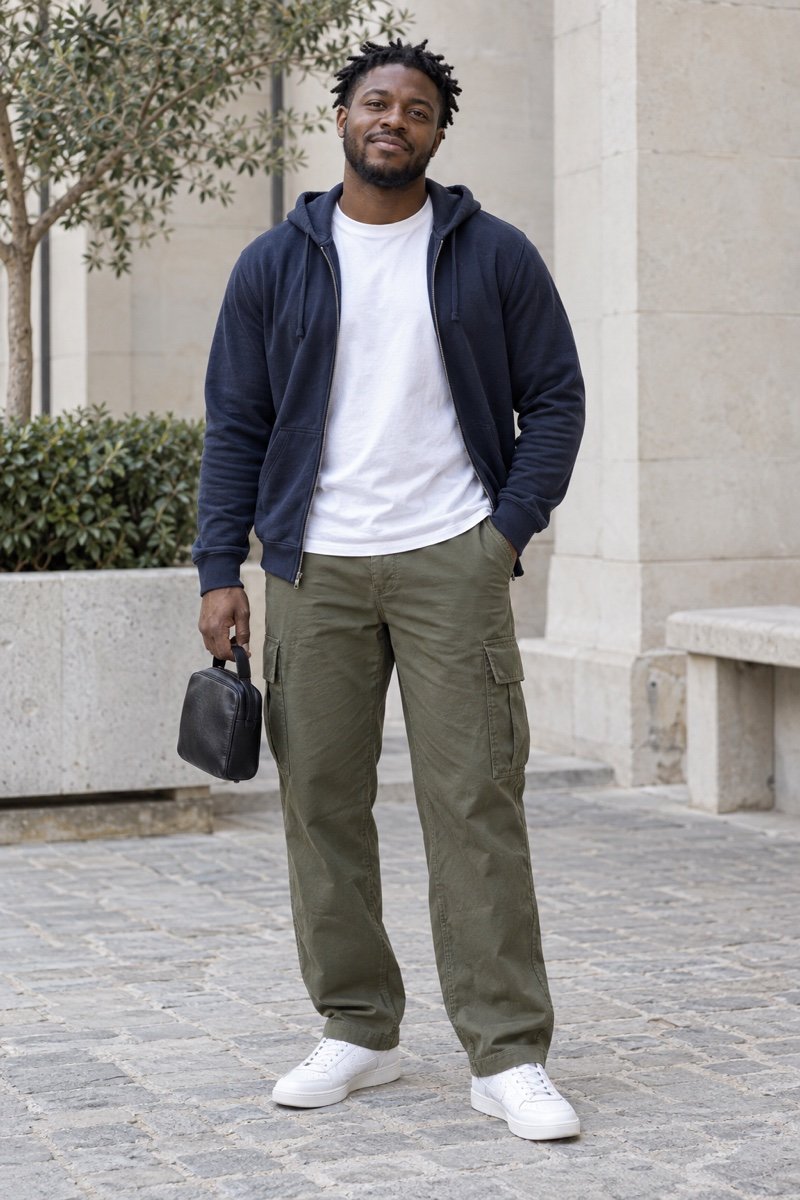

Plain tee and long jersey solve different coverage
A short tee under an open hoodie remains short-sleeved when the hoodie comes off. The long jersey with soft trousers keeps its sleeves indoors. Pick the actual base you want, then add a removable layer; an outer jacket cannot silently supply a long-sleeve base.
Neckline and torso length are separate choices
A crew, open collar, polo or off-shoulder edge changes the upper relationship. Long sleeves do not mean a covered shoulder or chest. A bodysuit introduces torso length and a snap-gusset bathroom task that a loose shirt avoids. Choose the closure you can use and inspect opacity before treating any option as a full replacement.
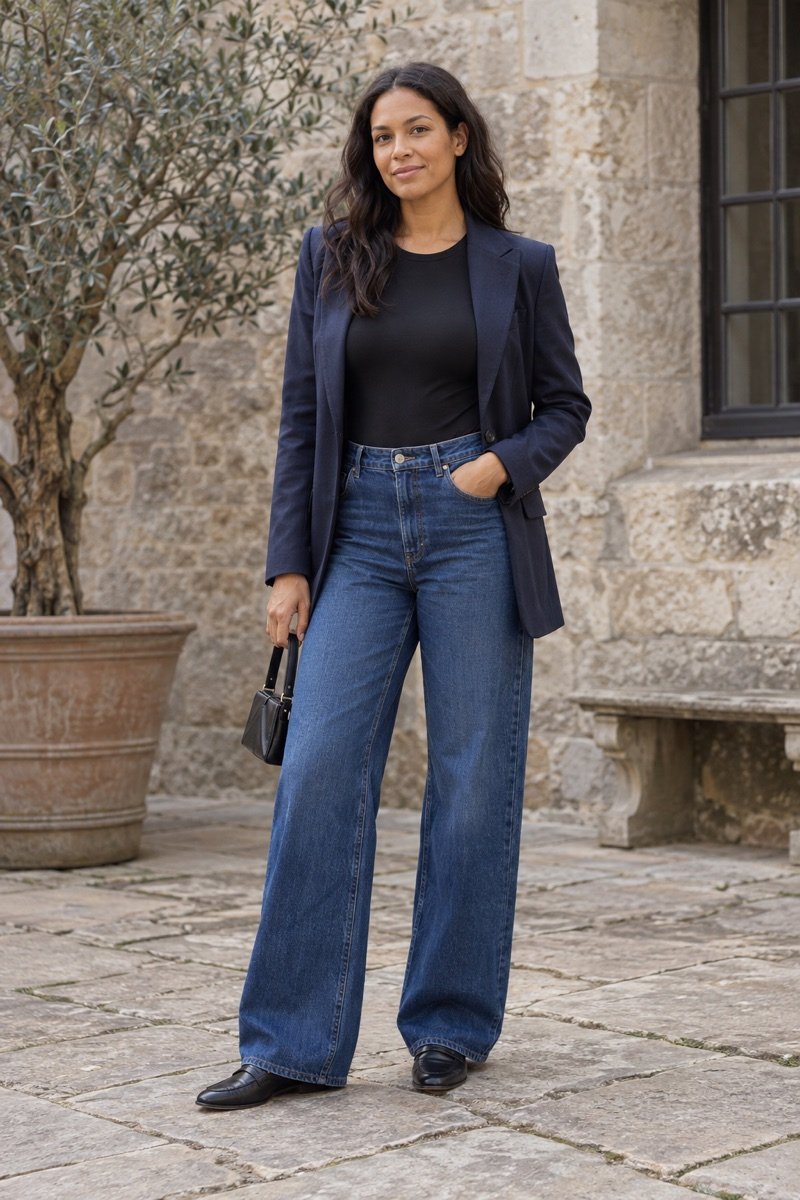
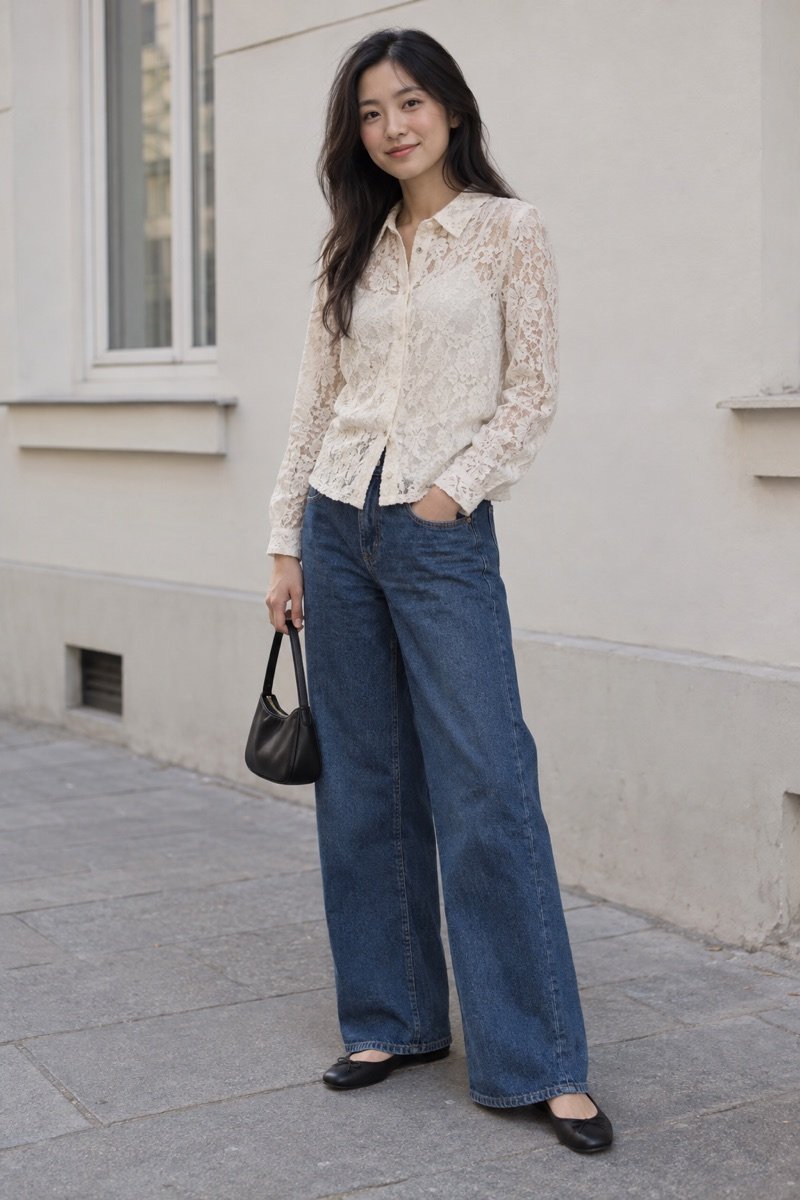
Gathered, draped and fixed-waist tops
Gathered sleeves add upper volume, a draped hem makes a diagonal edge, and a peplum has a fixed waist seam and flare. Check each actual edge seated and reaching. A tuck may change a loose shirt but cannot reproduce a sewn peplum seam or move a tight bodysuit torso.

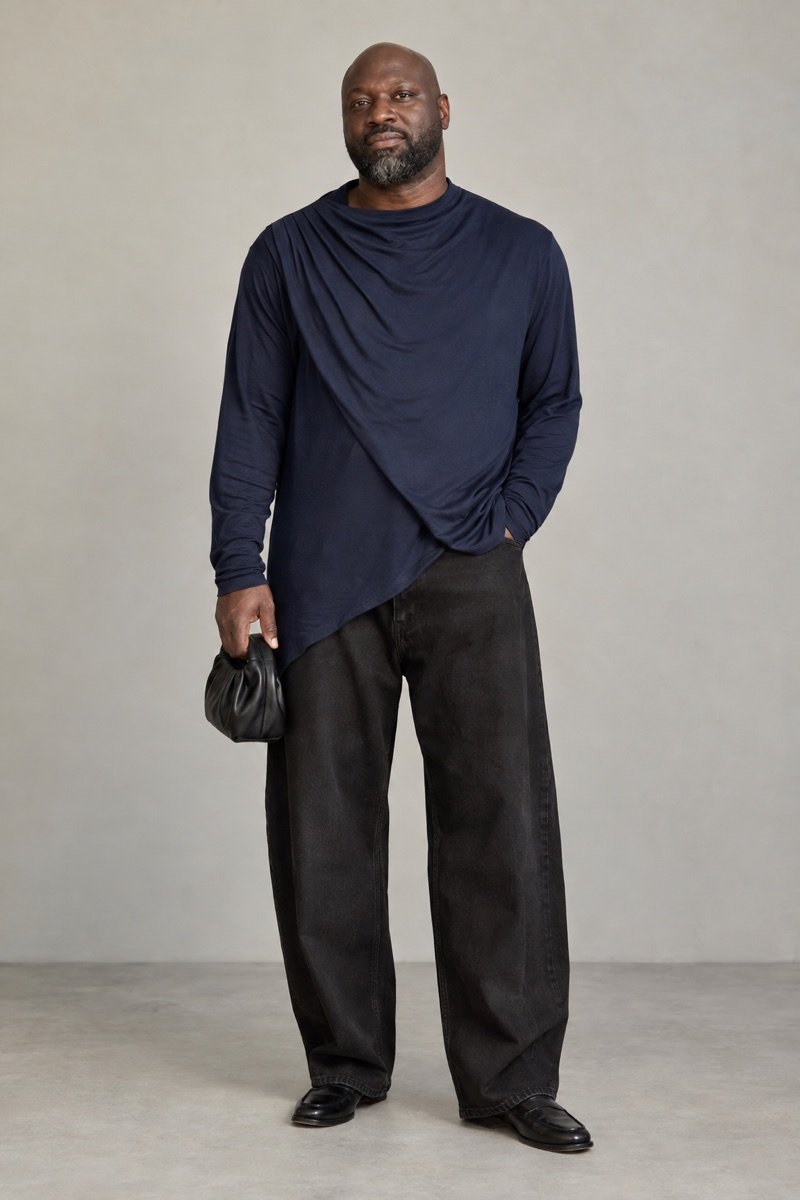
Keep the lower garment familiar first
Try the same jean or trouser with two upper constructions. Notice sleeve bulk, waistband interaction and whether a bag strap catches. If the new top needs an opaque underlayer, include it as an actual piece. Save the useful complete candidate and record your specific owned substitute before assigning the day.
Styling suggestions; individual fit remains a check for your own clothes. Revised 13 October 2026.