Choose the neckline for your day
A crew neck leaves less fabric around the neck; a roll neck makes a close dark line; a zip neck lets you open or close the collar. Try the actual neckline for sensory preference rather than assigning it to a body type. Shirt collars beneath knits need their own reach and seated test.
Leave room for the layer beneath
Check the armhole, elbow and waistband with the actual shirt or base worn underneath. A knit that fits alone may restrict movement over another sleeve. Choose a looser layer or remove a redundant one rather than forcing the stack to lie flat.
Texture can be the main detail
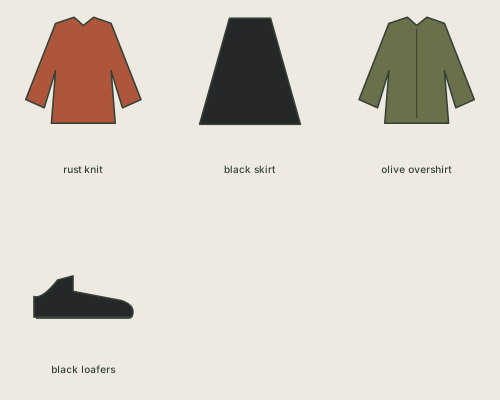
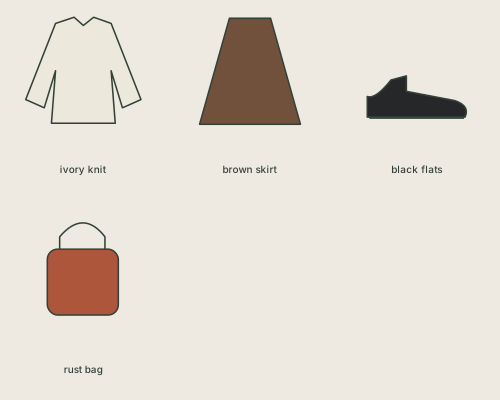
A cable knit above a smooth long skirt uses texture without another print. A fine knit under a blazer is a quieter office direction. If texture or seams feel bothersome, a smoother pullover is a useful substitute; no fabric name guarantees a particular feel.
A dress can supply the lower shape
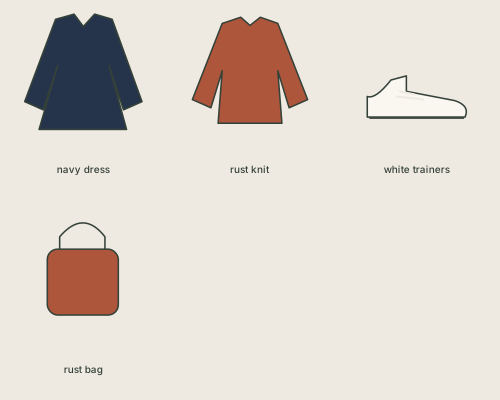
Try a roomy crew neck over a long shirt dress to create a skirt-and-knit impression. Check buttons and a belt or tie beneath the knit; use the separate skirt if they bunch. The result is an owned-item experiment rather than a reason to buy a new dress.
Warmth and care remain garment-specific
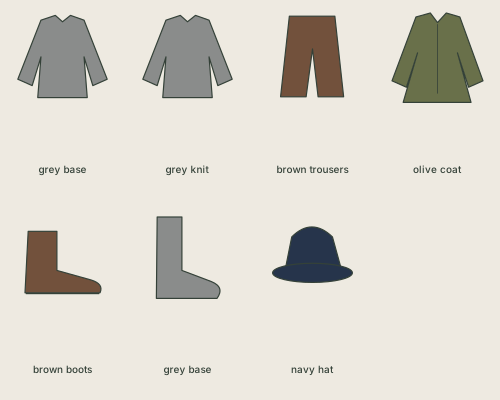
A base, middle and outer layer have different roles; the actual weights and your forecast decide the useful stack. Do not assume a fine knit is enough for a cold walk. Follow the garment care label and allow drying time in a trip plan before assuming you can rewear it.
These are original styling suggestions, not a body diagnosis or a claim of tested individual fit. Published 11 October 2026.
Follow the next useful decision
- Layering with a complete indoor base
- Long skirts: movement before a formula
- Care labels and a realistic rewear plan