
First decide what matching must mean
The matching suit uses coordinated tailoring and an accepted formal shirt, tie and dress shoe. The soft set uses a knit outer and elastic-waist knit trouser. The linen set uses a loose shirt and trouser with an opaque base. They are different constructions even if each uses one main colour.
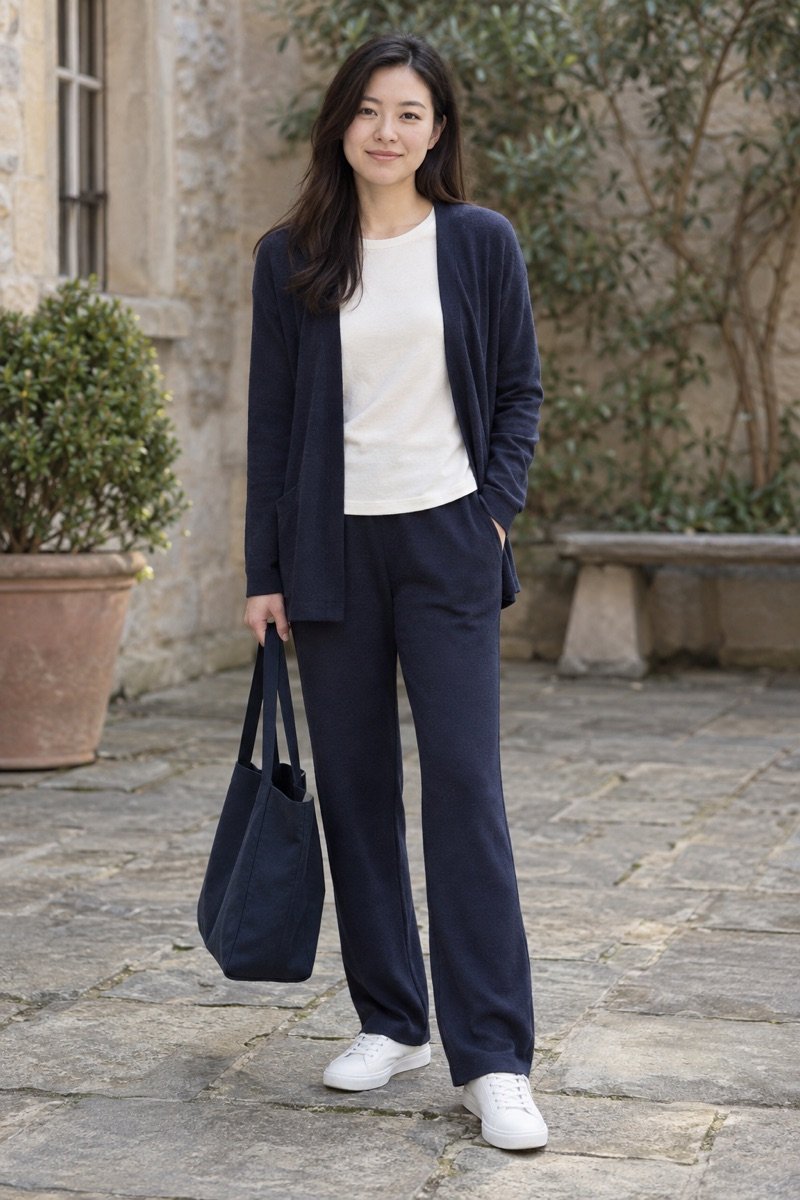
A soft set for a seated travel day
The navy knit set remains casual. Check jacket shoulder and sleeves separately from trouser rise, waist and knee ease. The ivory jersey remains a complete opaque base when the jacket comes off; the tote carries the removed layer. Compare this with the hoodie-and-jogger route if you prefer a zip rather than an open knit.

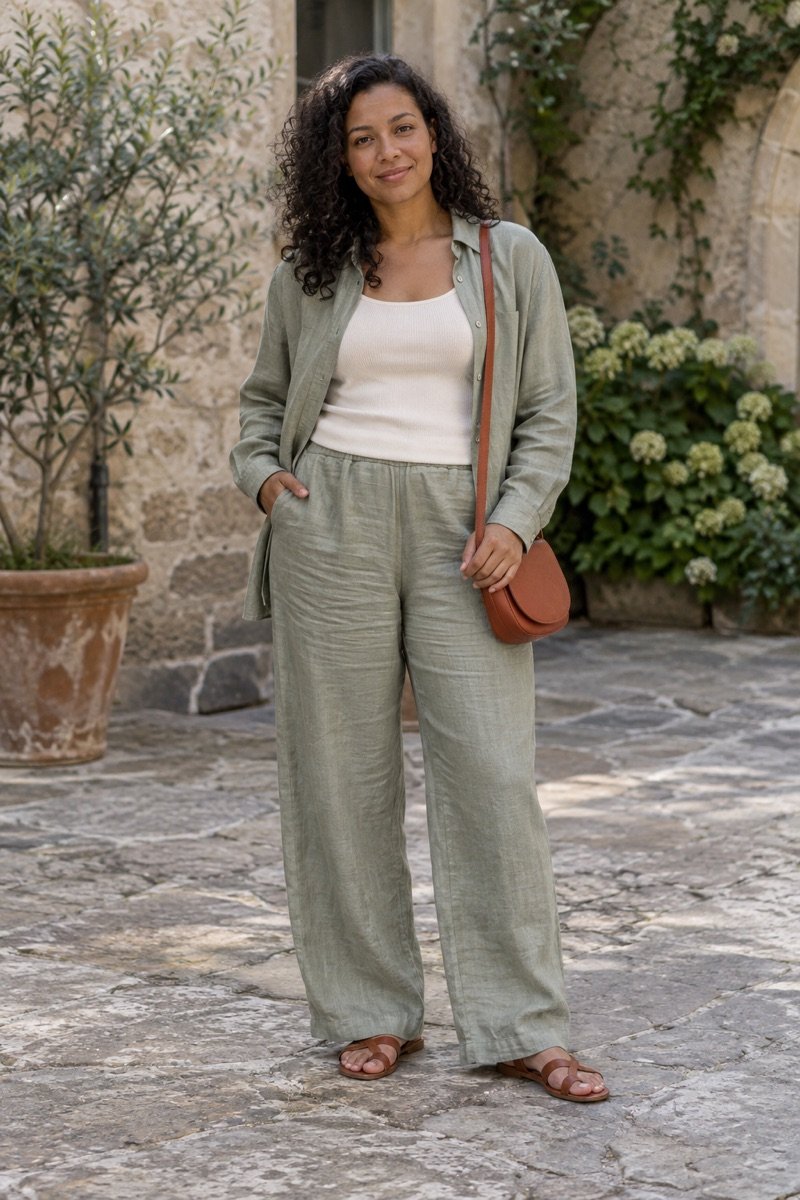
A light set with an honest indoor base
The sage shirt is open over a tank in this reference. Removing the shirt leaves a sleeveless base, so it cannot meet a long-sleeve base filter. Buttoning the shirt or substituting a light long-sleeved opaque top is an actual change to record. Check opacity and actual weights before choosing it for heat.

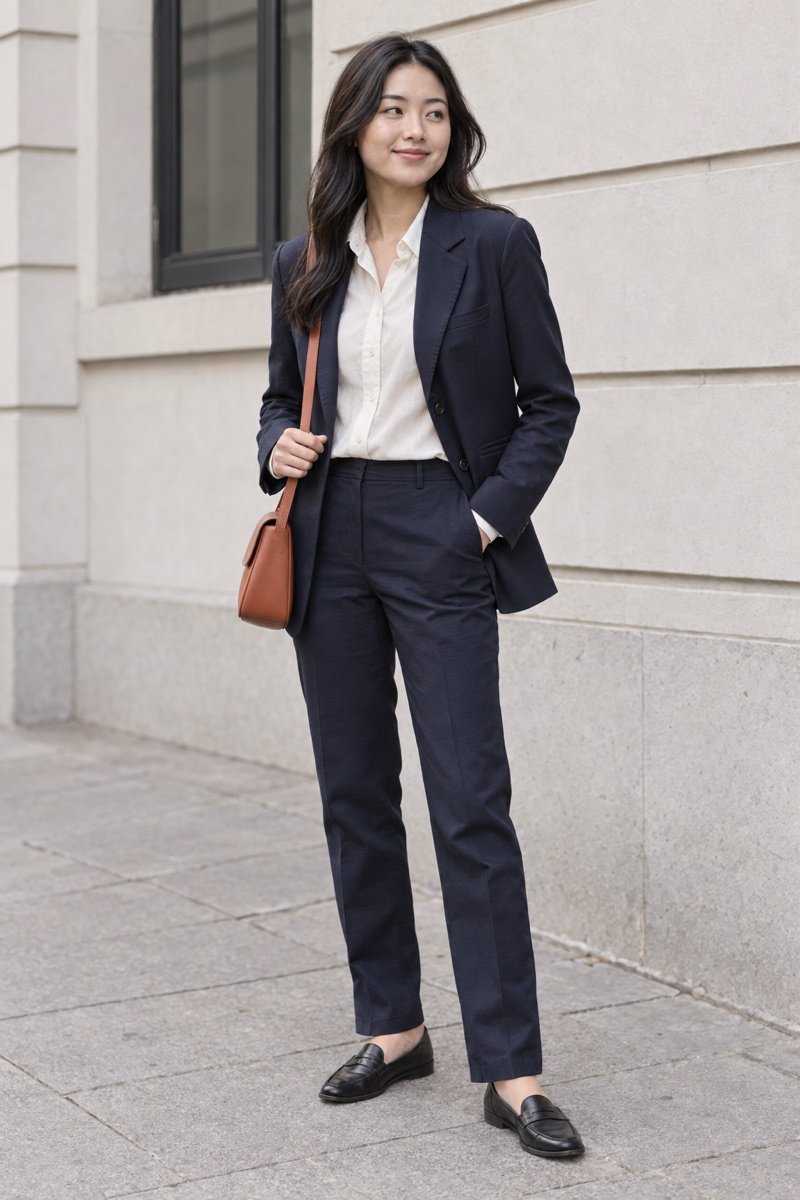
Matching tailoring is the code-sensitive branch
A blazer with chinos is a separates outfit even when both are navy. For a suit-required workplace or invitation, choose the actual matching jacket and trouser plus the required shirt and accessories. Strict evening codes have their own dinner-suit or tailcoat components; a casual set is not a substitute.
Separate the pieces when one fails
Fit each garment independently; keep the useful top with another lower garment if one half fails. Confirm the actual care instructions of both pieces and possible dye differences before assuming they can be washed together. Similar tones from owned clothes can create the same visual idea without buying a sold set.
Styling suggestions; individual fit remains a check for your own clothes. Revised 13 October 2026.