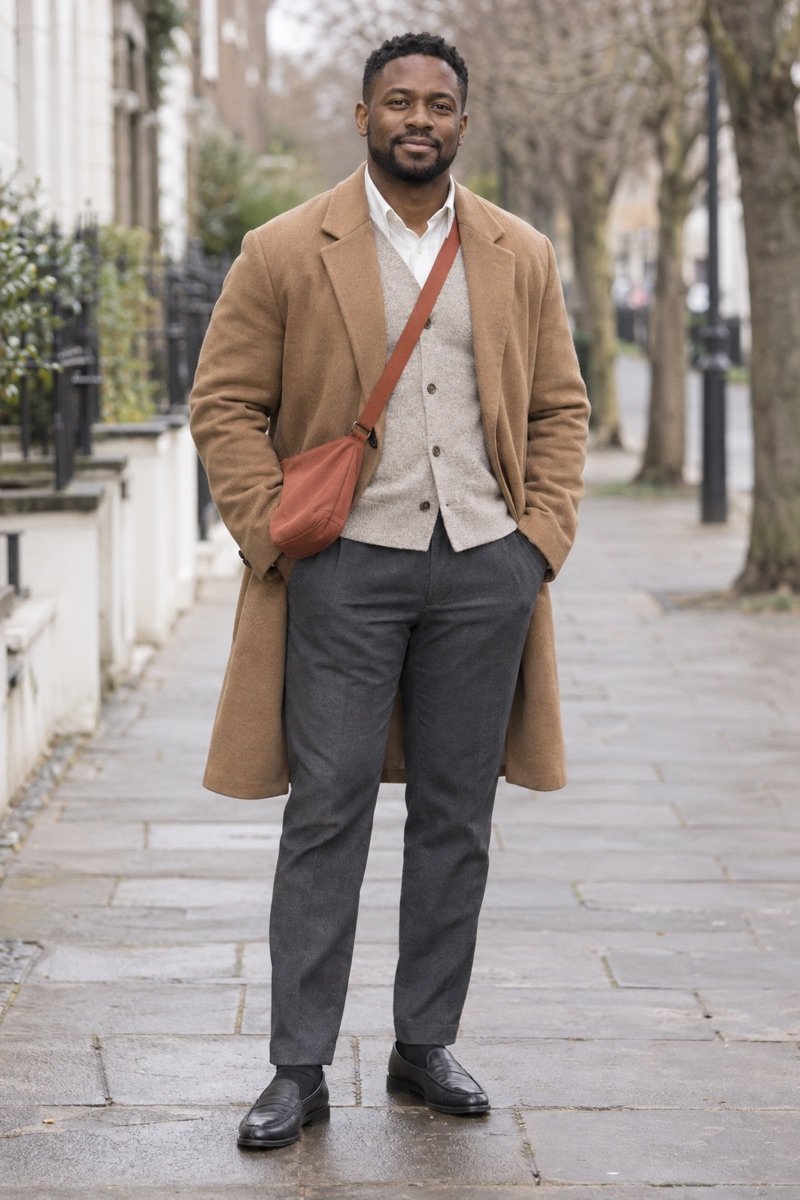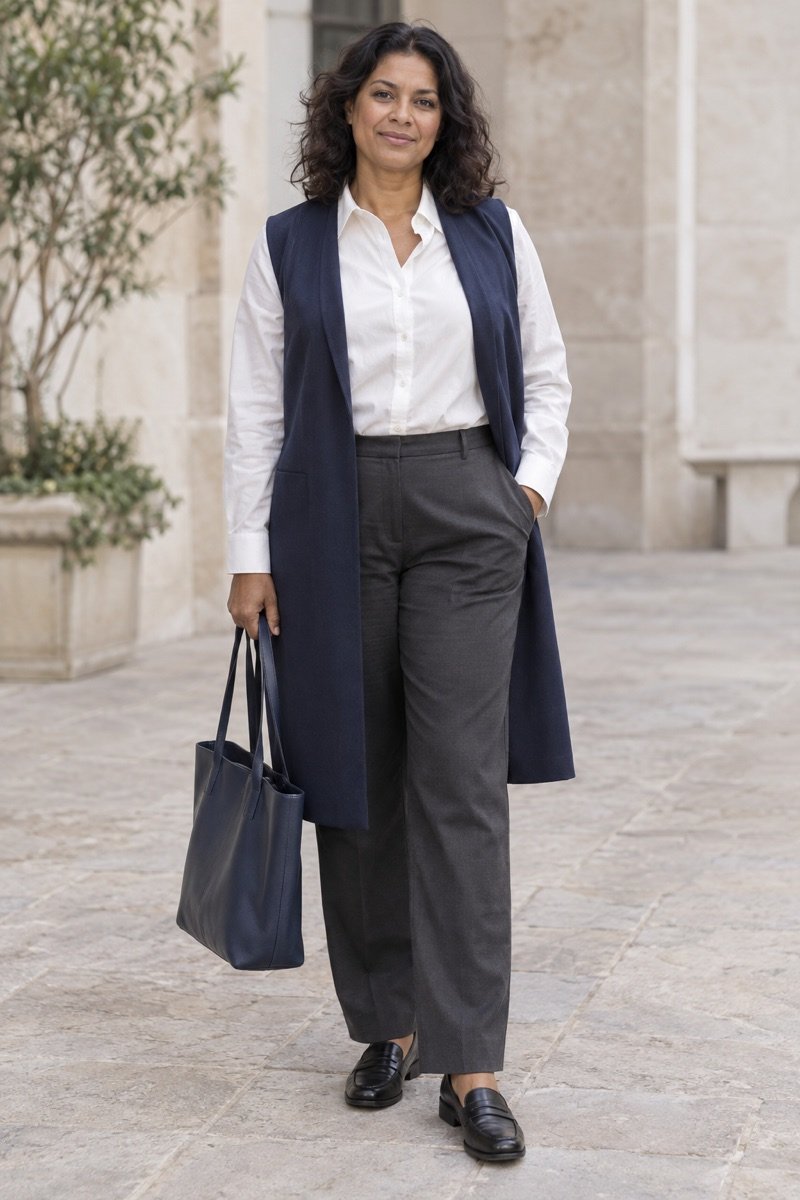
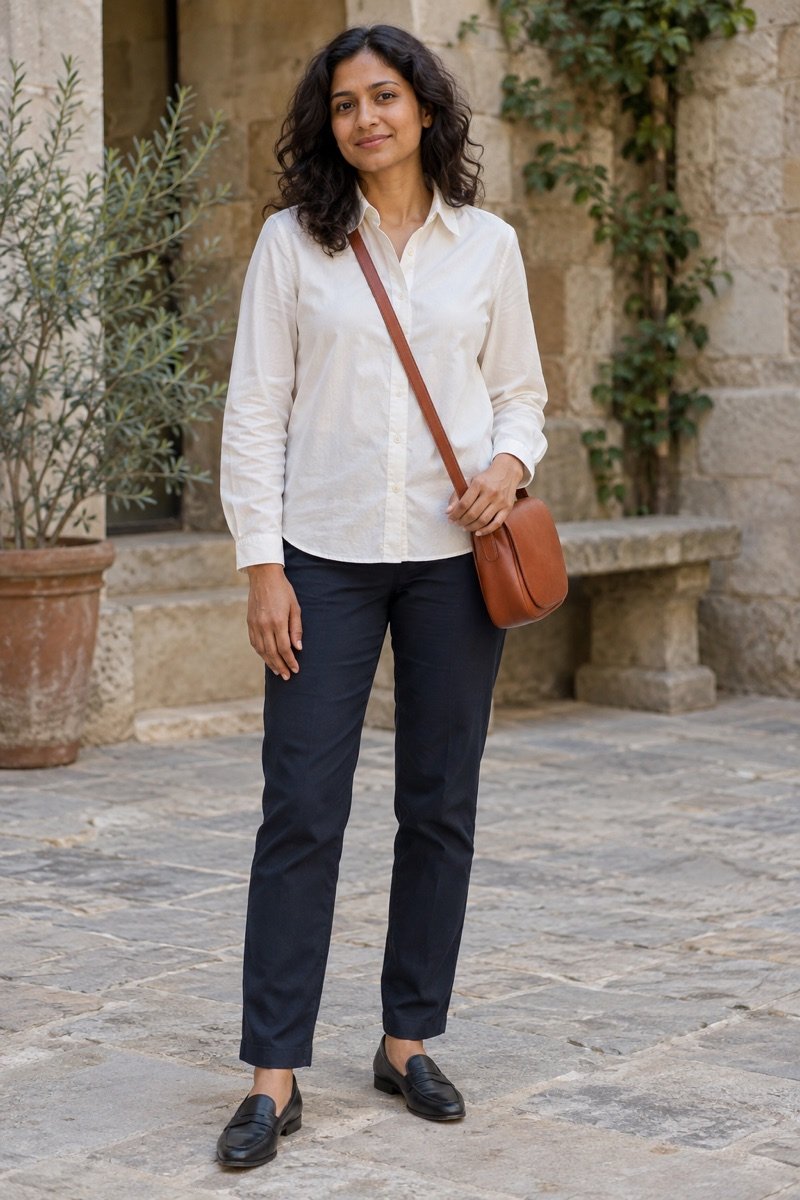
Straight trousers: a readable shoe endpoint
The tailored straight trouser and open waistcoat make a defined office-separates route. Check the hem in a full step so it clears the back of the loafer. Sitting changes trouser length; choose an edge you find useful rather than pretending one break is universal.
Broad denim: length comes before a tuck rule
The wide denim can conceal more of the shoe. Check that the hem stays off the ground during walking and stairs, with these actual flats. The light shirt can be untucked or loosely tucked by preference; altering shirt placement does not fix a dragging jean.
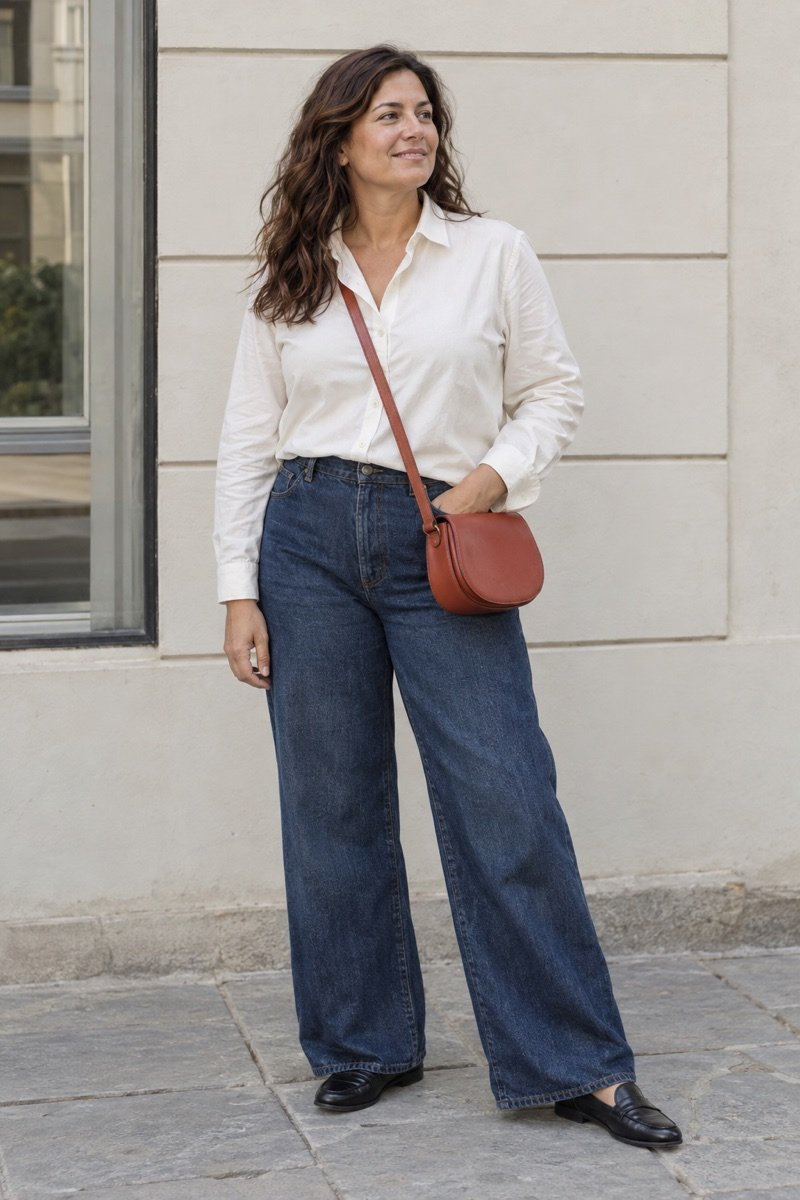
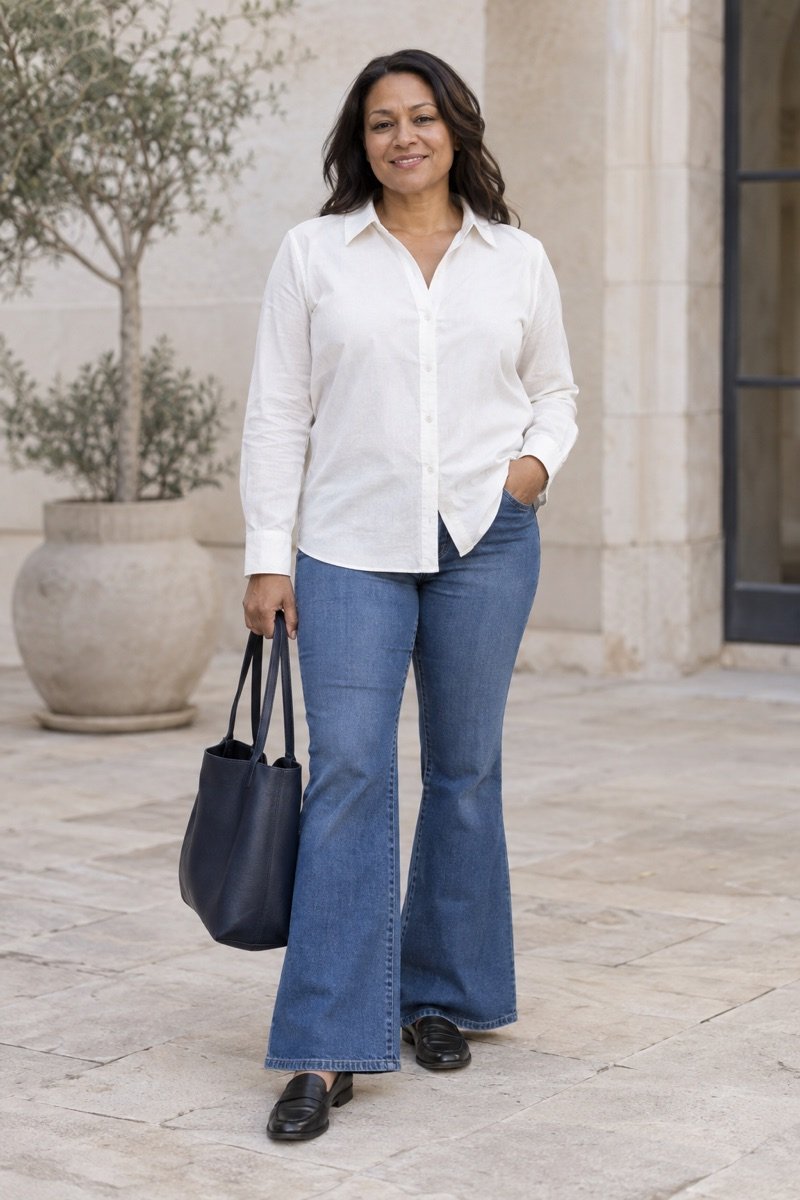
Flared denim with an untucked collar and flat loafers
A skirt gives the shoe a different job
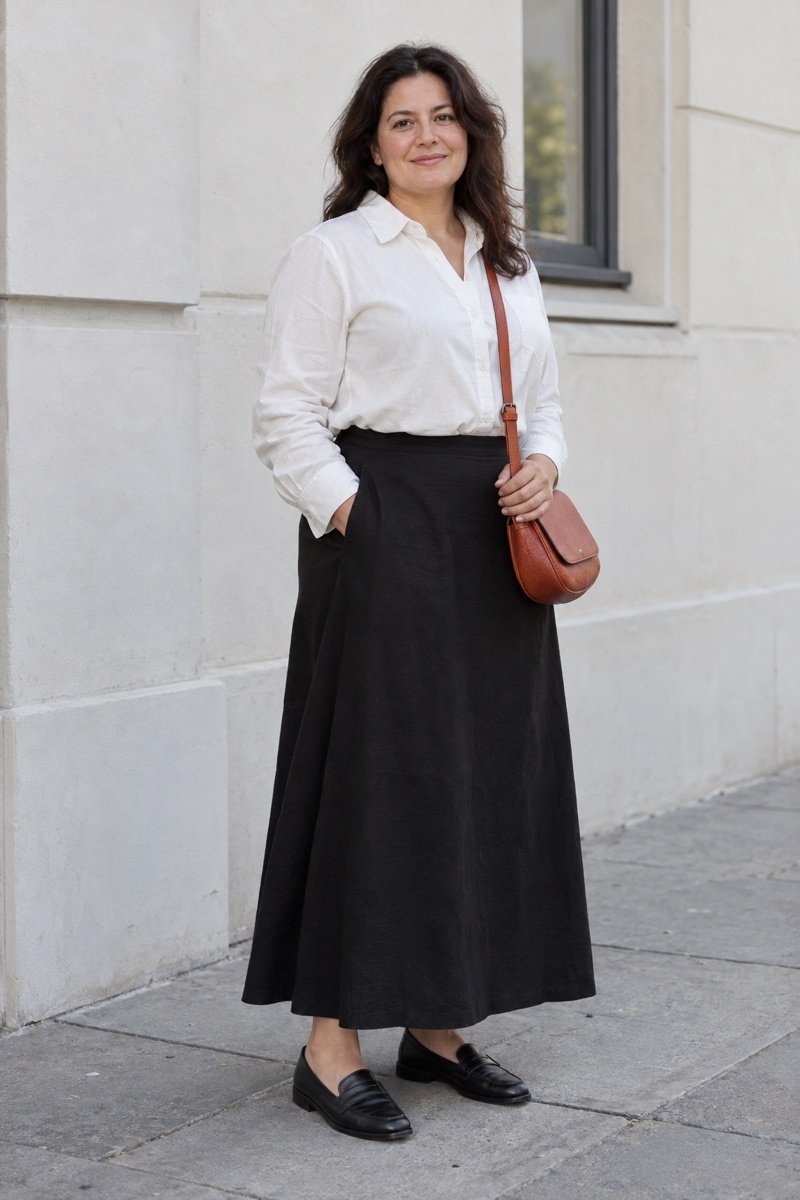
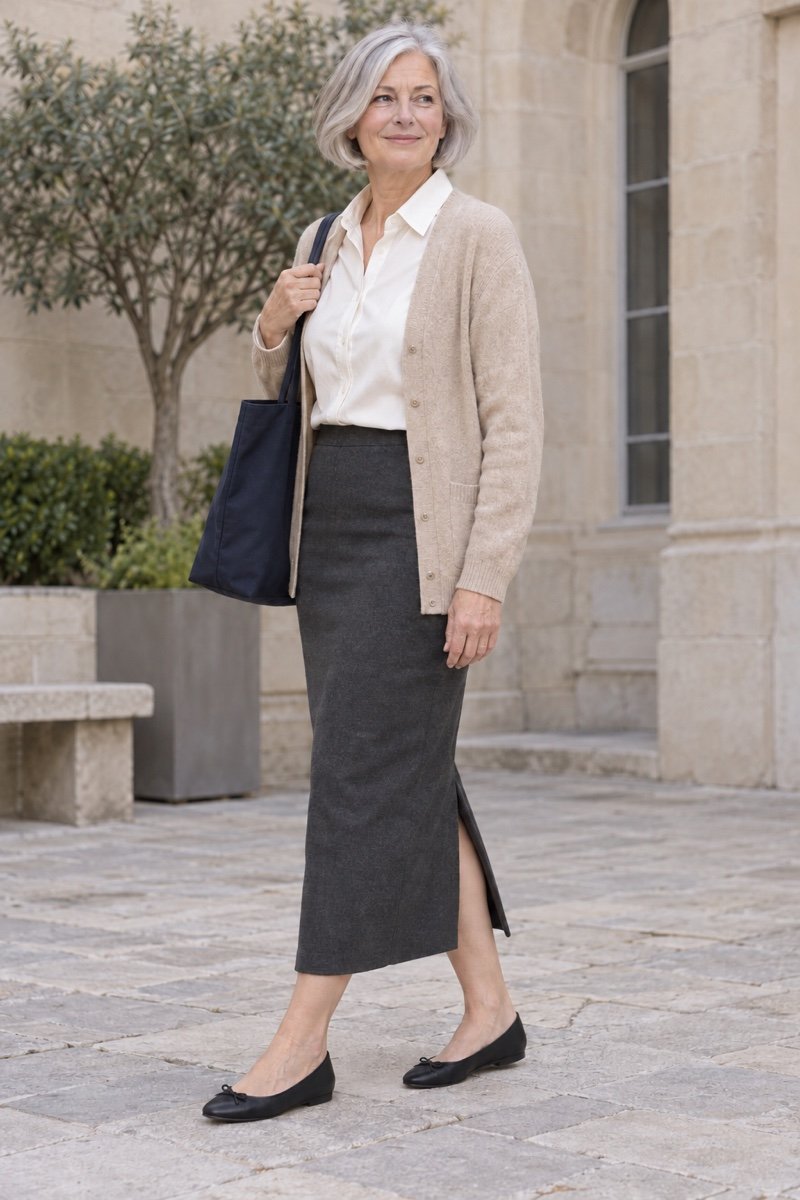
The long dark skirt and collared shirt make the shoe a visible anchor below a moving hem. Check the skirt opening as well as its length. A narrower pencil skirt introduces a walking vent; it is a different task from choosing the same skirt in another colour.
Cold or wet travel may need another shoe
Socks are a mapped part of cold loafer looks. Test the actual thickness and heel security. For a wet commute, carry an accepted indoor loafer while using the shoe that suits your real conditions outdoors; keep both in personal extras. No loafer label guarantees water resistance or grip.
Keep the substitution specific
A buckle-free pull-on shoe can remove one fastening task, while trousers, shirt and bag still have closures. If the heel slips or the upper presses, choose a familiar different flat rather than expecting styling to correct shoe fit. Confirm the office or host permits it, then update the hem check.
Styling suggestions; individual fit remains a check for your own clothes. Revised 13 October 2026.