Start with one colour area
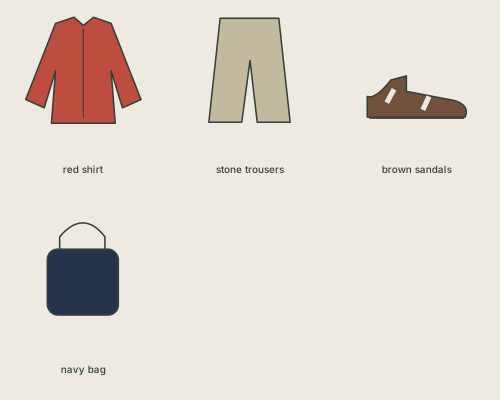
Keep two familiar neutral pieces and try a colour in the top or accessory. Rust over navy chinos, a red shirt above stone trousers, or a pink shirt above black trousers give different intensities. You do not need a colour-season label to decide what you enjoy wearing.
Tonal, adjacent and contrast
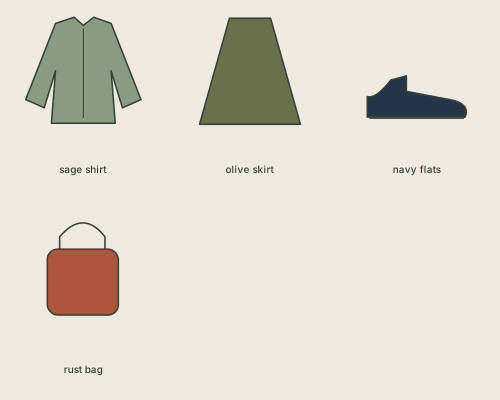
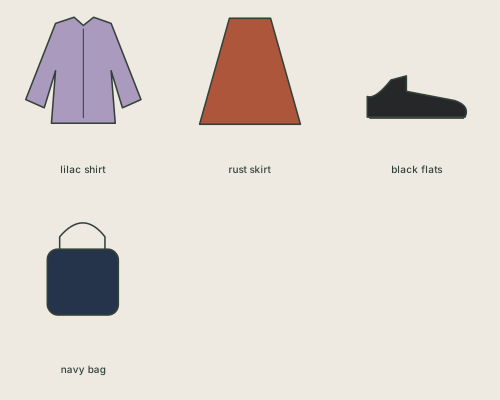
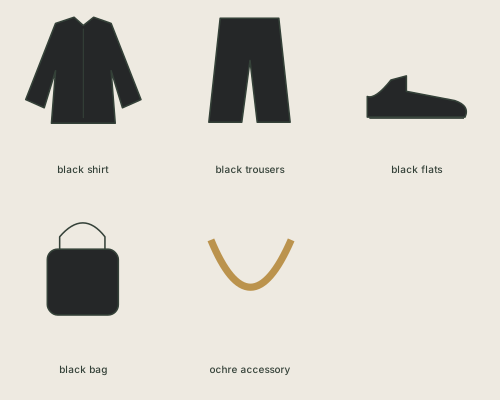
A black shirt and black trousers use texture within a monochrome family. Sage with olive uses neighbouring green tones; lilac with rust gives a softer two-area contrast. Conventional colour-wheel terms such as complementary or triadic describe arrangements, not a scientific guarantee that clothes suit a person.
Use three areas deliberately
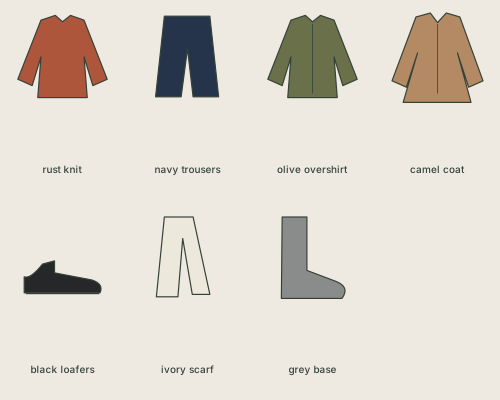
Try camel coat, olive knit and navy chinos as three muted garment areas, or charcoal tailoring with white shirt and one burgundy tie accent. A theoretical three-colour scheme is an optional experiment; real fabric, area and your preference decide the result.
A print can carry the whole choice
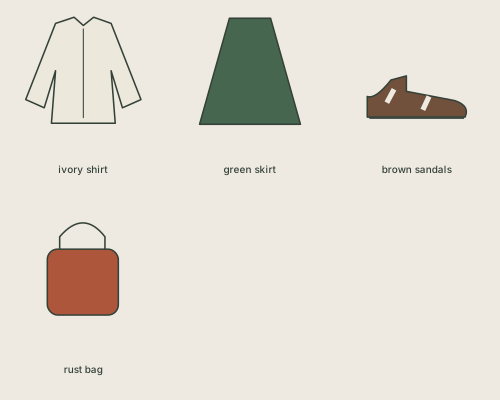
An ivory shirt lets a printed skirt lead. A stripe above plain navy trousers keeps the pattern in one place. Two prints can be tried with a shared colour range, but exact matching and universal print-scale rules are unnecessary. Keep either print and simplify the other when you prefer less activity.
Texture changes colour in practice
Matte blouse, satin skirt, denim and cable knit can reflect light differently even when names are similar. Look at the actual garments together in your own light. Do not assume every black, navy or terracotta dye matches because a diagram uses the same label.
Use the palette notebook
The colour tool gives sixteen labelled palettes, each with top, bottom, shoe and accent roles and a complete linked look. Navy with rust and sage with olive have working examples. Text colour names remain visible so the choice does not depend on seeing the swatches alone.
These are original styling suggestions, not a body diagnosis or a claim of tested individual fit. Published 11 October 2026.
Try the sixteen labelled palettes ↗
Follow the next useful decision
- Personal style as a practical experiment
- A shirt does more than one job
- Knits: texture, neckline and room to layer