Start with what needs to come with you
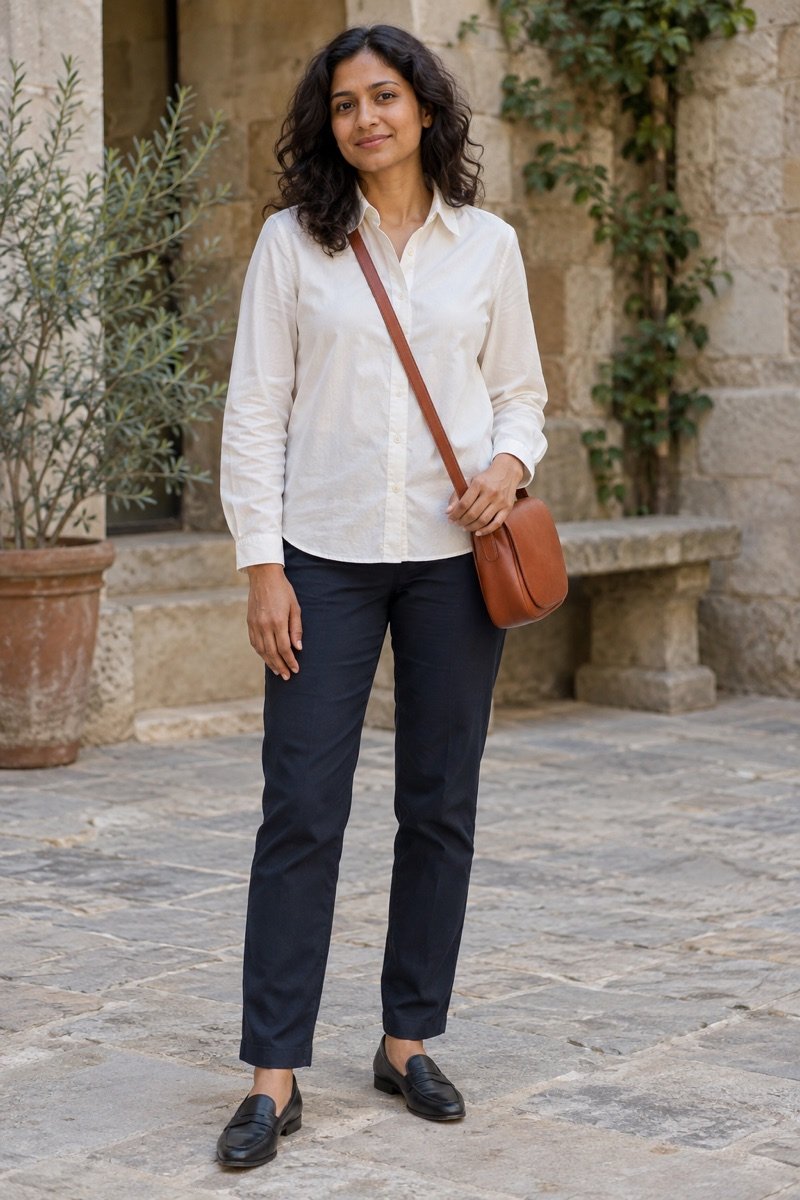
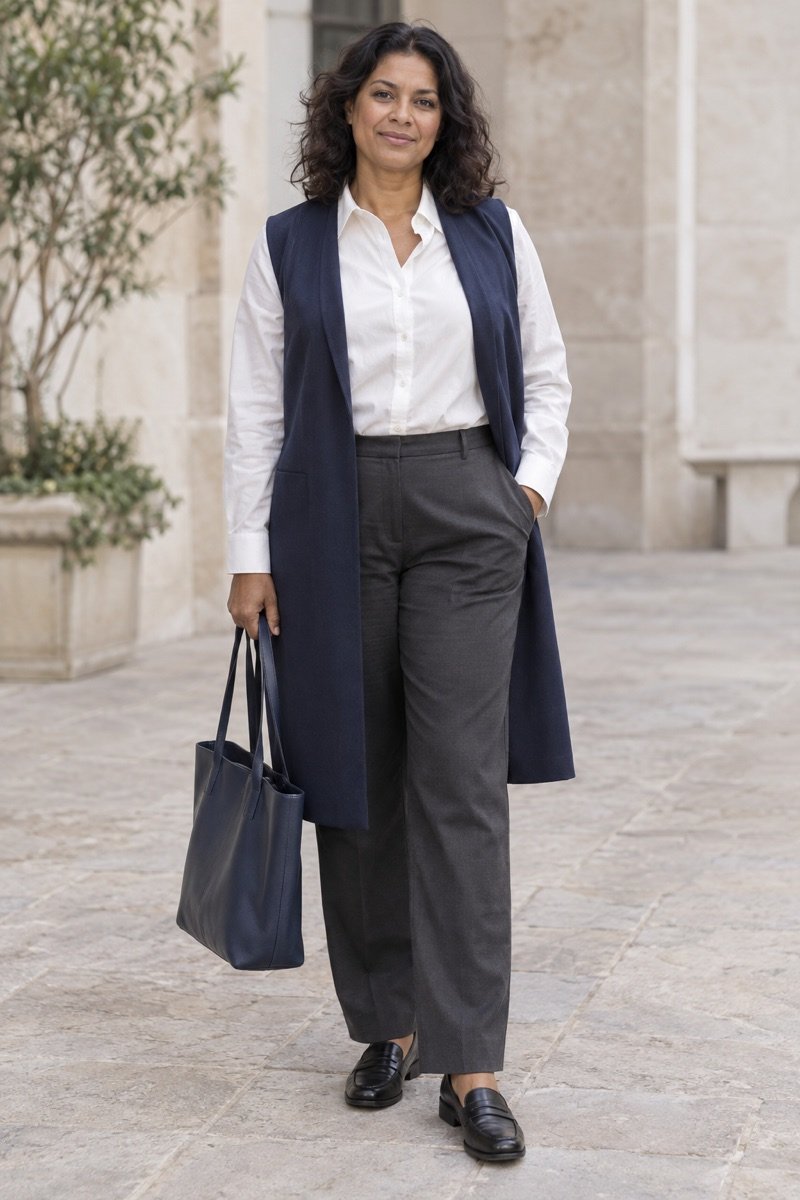
A tote and a crossbody solve different carrying tasks. Check the real items, closure, strap reach and where the bag sits when seated. The smaller evening bag is a choice for a different load; it is not automatically admitted by a concert venue or large enough for your equipment.
Compare strap placement with the upper layer
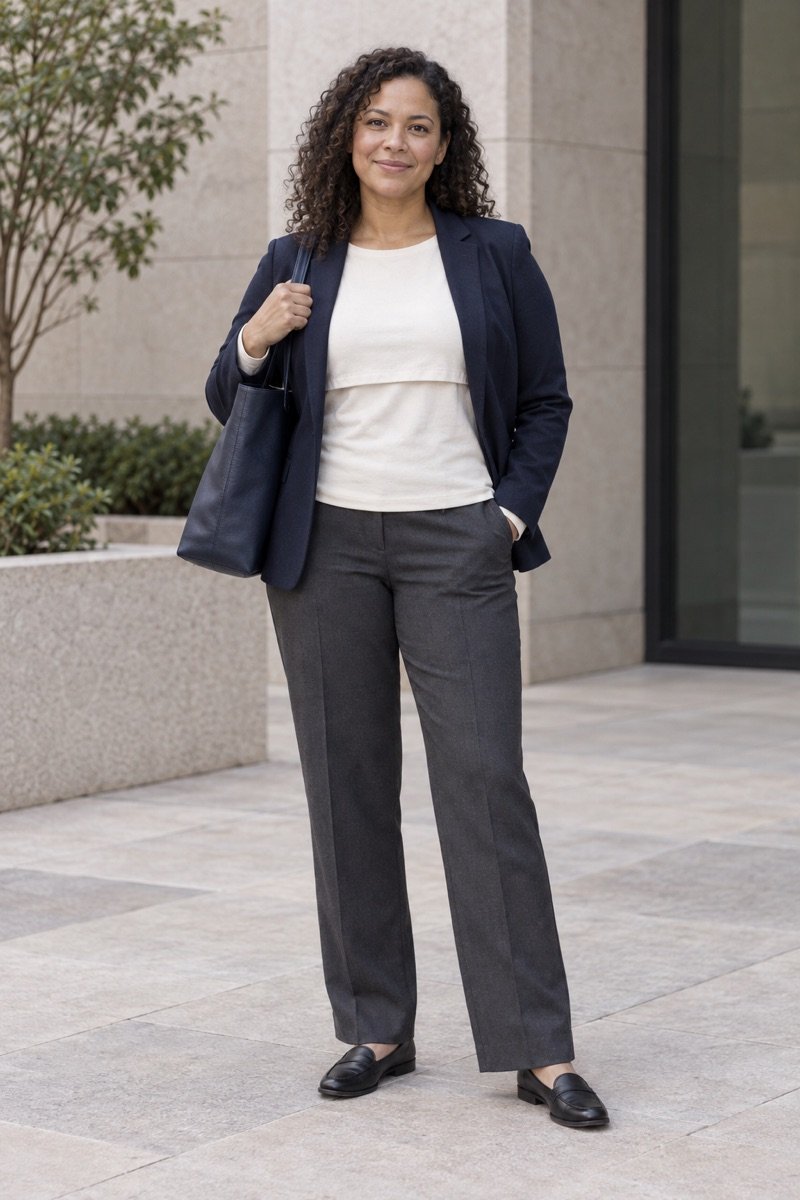
A crossbody passes across a button shirt; a tote sits on a shoulder or in a hand. Try the actual strap over a cardigan, blazer or open crochet so it does not catch or restrict your opening routine. If the strap crowds a nursing panel, move the carrying role rather than dropping the access requirement.
One accent can stay small
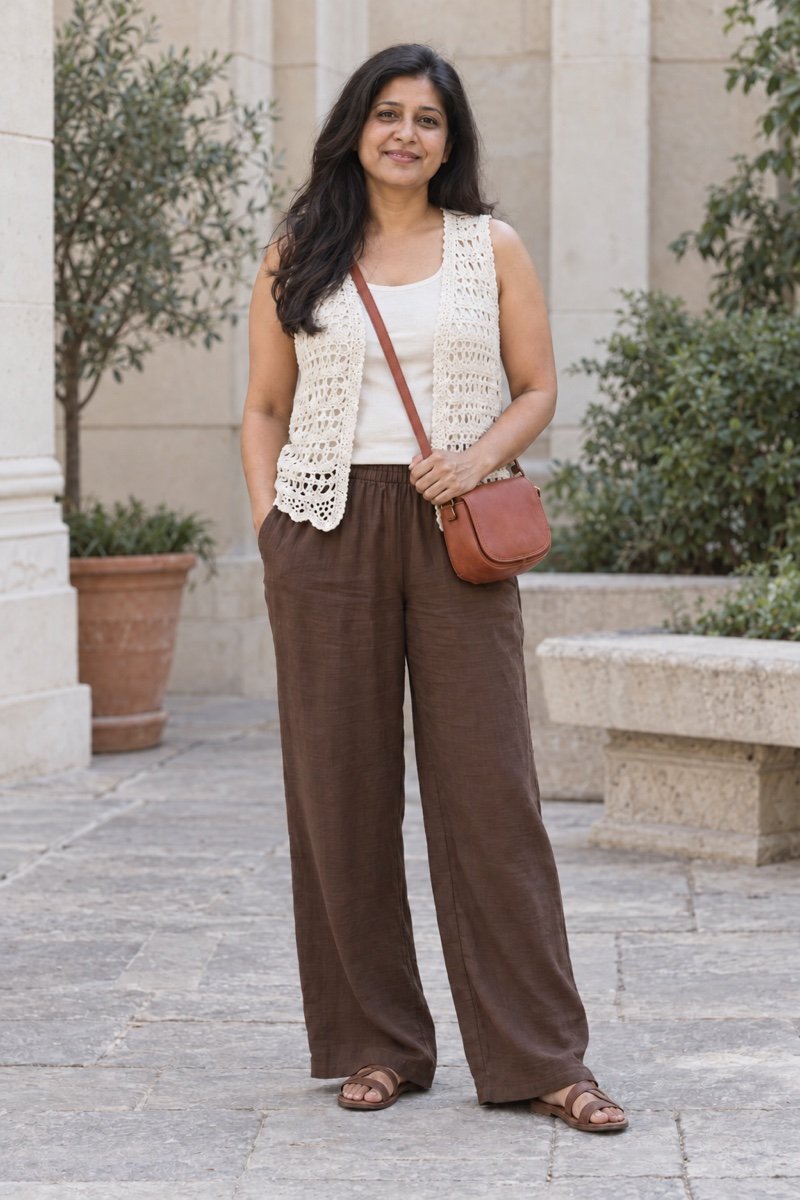
Terracotta in a bag changes a smaller colour area than replacing a navy trouser. A necklace above a plain blouse is another optional focal point; the matte blouse and long skirt remain complete if you omit it. Check jewellery against your neckline, movement and workplace or ceremony requirements.
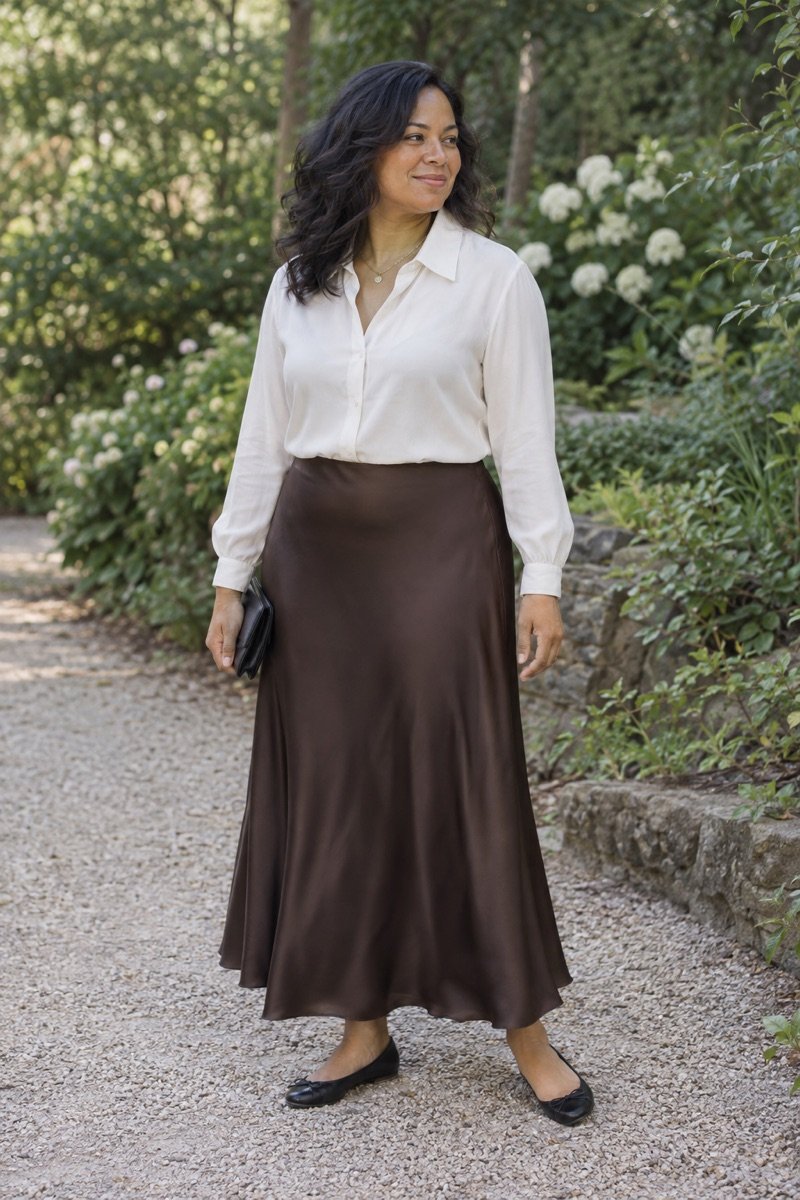
Matte separates for a covered garden cocktail
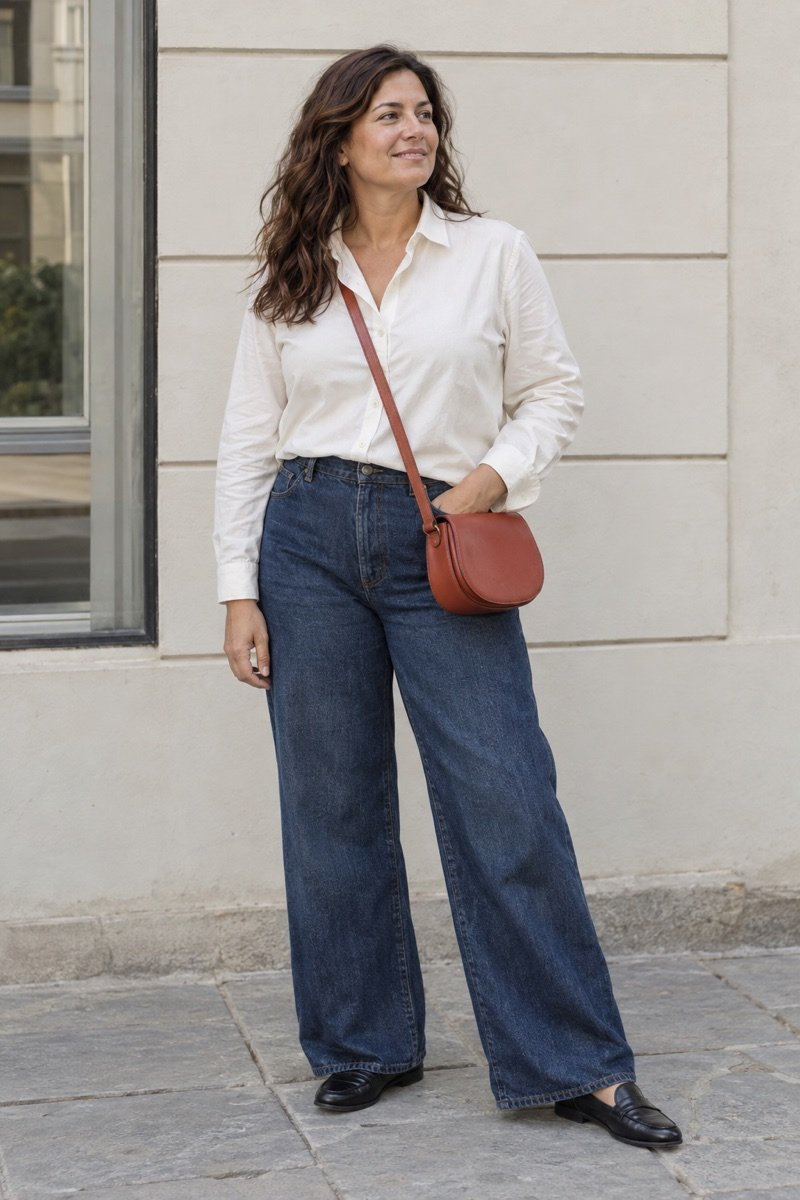
Belts and scarves are choices, not body corrections
A belt adds a closure and local pressure; try it only if you want that waist or carrying relationship. An elastic waistband does not require a decorative belt. A scarf is useful only when its actual warmth, length and storage suit the day. Keep it clear of movement or equipment according to your own appropriate guidance.
Keep every real addition in the plan
If you add a belt, extra bag, route shoe or underlayer, record the actual item rather than counting it as silently present in the mapped look. Try removing one decorative accessory before buying another. A two-print outfit can use a plain bag; replacing that accent reduces one print area while retaining the two clothing prints.
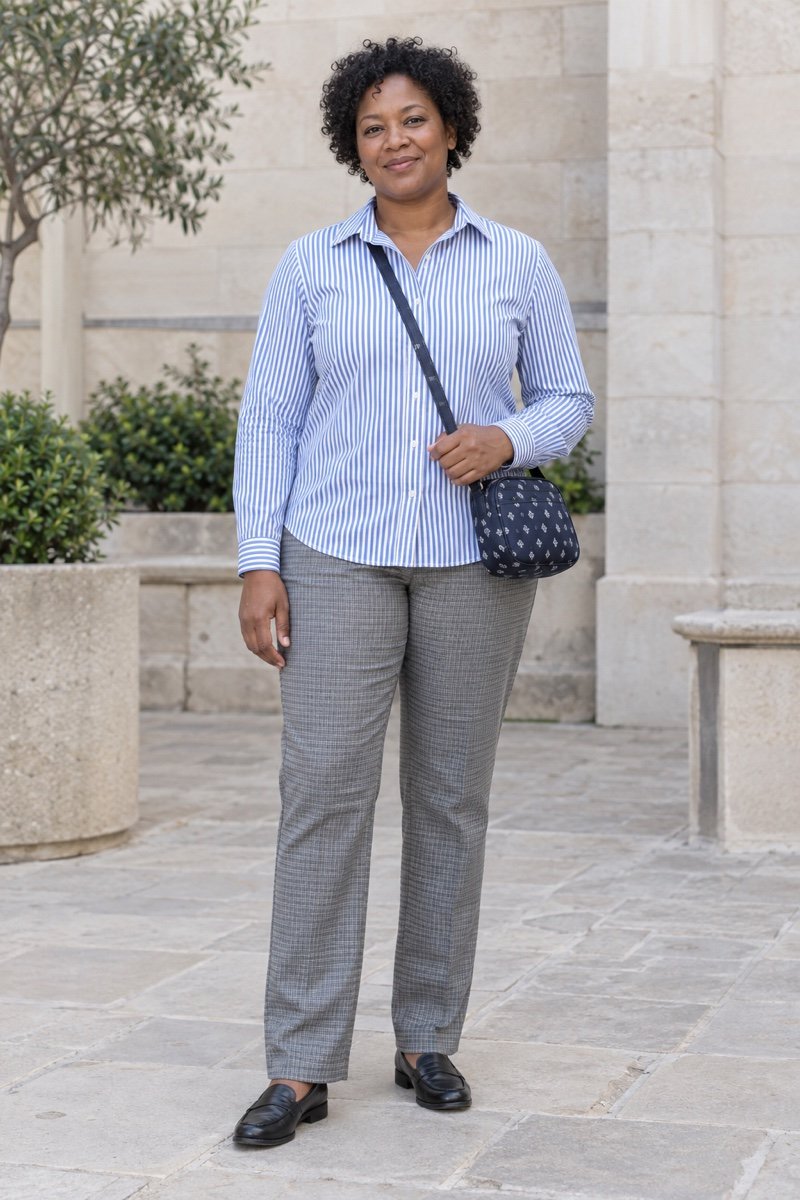
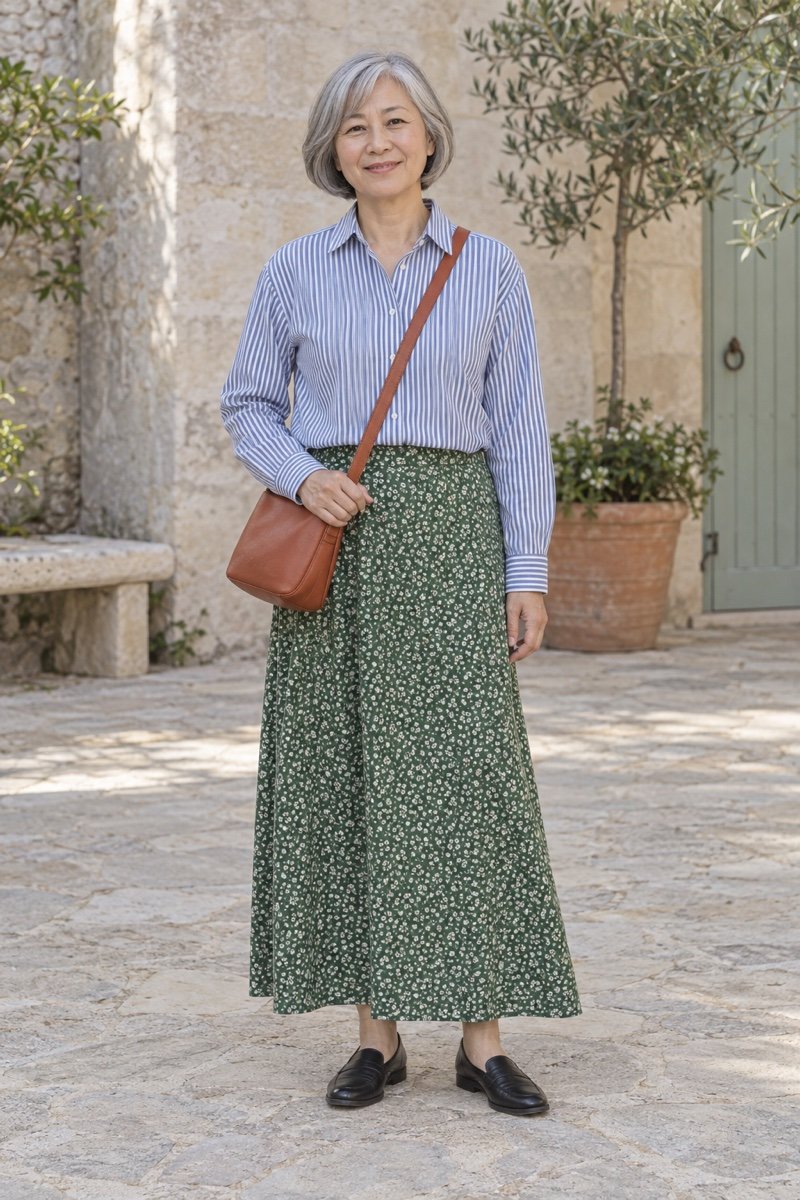
Styling suggestions; individual fit remains a check for your own clothes. Revised 13 October 2026.